Landscaping and Security: How Plants Help or Hurt Your Property's Safety
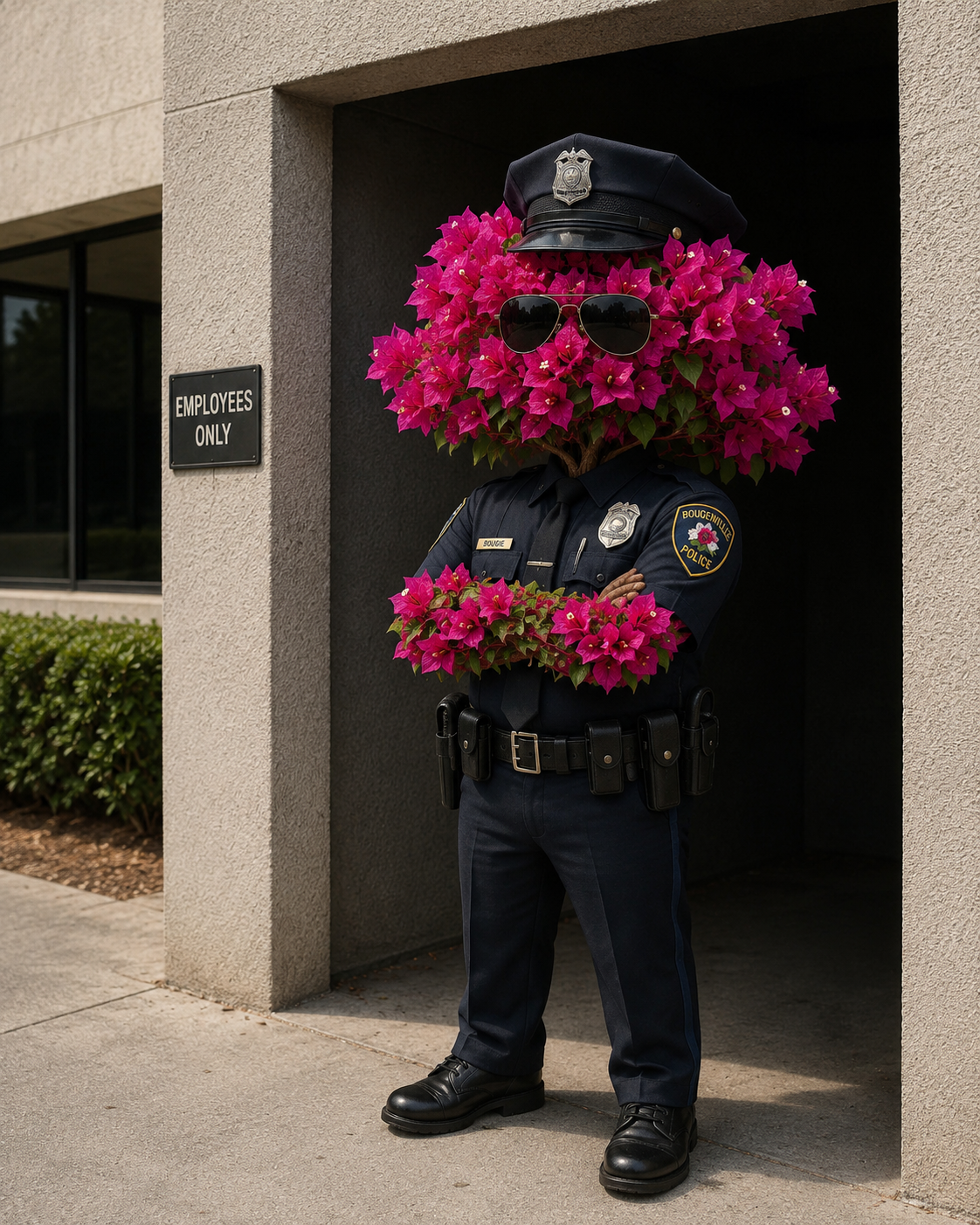
Officer Bougie on patrol. Thorny plants like bougainvillea make excellent hostile vegetation in CPTED landscaping.
The plants on your property are either helping your security or hurting it, and most owners do not realize which. Overgrown shrubs and low tree canopies create hiding spots, block lights and windows, and signal neglect to anyone looking for a target. A little maintenance and a few CPTED principles, starting with the two-foot/six-foot rule and hostile vegetation, turn your landscaping into an asset instead of a liability.
I have seen bushes high enough to hide a small elephant planted two feet from a front door. I have seen tree canopies eating parking lot lights whole. I have seen foundation plantings blocking every window facing the street, on properties that had no idea it was a problem.
That is what makes landscaping one of the most underestimated security vulnerabilities on any property. And it is almost always overlooked.
What Your Landscaping Is Telling Criminals Right Now
Plants and trees create perfect hiding spots, and the problem is made worse by where they are planted, such as near entrances and exits. I have seen plants that could easily conceal an adult within a few feet of a front door.
Overgrown landscaping also blocks lights and windows. Look up at the streetlights in any parking lot you pass. I am willing to bet more than half of them have at least one light blocked by a tree canopy. That is not a maintenance issue. That is a pool of shadow in a space your employees and customers have to move through. A bush covering a window that faces your parking lot is eliminating the passive observation of everyone inside. You have lost surveillance you did not even know you had.
And then there is the signal a neglected landscape sends. An unkempt, overgrown, or dying landscape tells anyone paying attention that no one here is paying attention. That is one of the primary things criminals look for when selecting a target. To a criminal, the thinking is straightforward: if no one cares about the landscaping, no one is probably paying attention to anything else.
Poorly maintained and poorly placed landscaping is not an obscure problem. Anyone trained in Crime Prevention Through Environmental Design has spent hours on this topic alone. These issues are well documented, widely taught, and well known to security professionals. If something happens on your property and your landscaping was a contributing factor, do not expect it to go unnoticed.
How Landscaping Can Work in Your Favor
Strategic landscaping guides people where you want them to go. A row of low shrubs along a sidewalk keeps foot traffic on the intended path. A large tree with a tall open canopy near your entrance acts as a landmark and a natural welcome.
Thorny plants like bougainvillea, barberry, and hawthorn placed in alcoves and blind spots along your building's exterior remove the option of concealment from spaces that are hard to monitor. A bougainvillea in that alcove that serves no real purpose brings attention to the area while making it uninviting. This is what CPTED practitioners call hostile vegetation. It looks like landscaping. It functions like a deterrent.
A well-maintained landscape also sends the opposite signal that a neglected one does. Nicely mowed grass, trimmed shrubs, and trees with tall open canopies tell people that someone cares about this property, more than any security system or beware-of-dog sign ever can.
Four Things You Can Do This Week
Start with maintenance. Make sure plants are watered, flower beds are kept up, and the grass is cut regularly. The landscaping should look like someone cares.
Apply the two-foot/six-foot rule. Trim all bushes to no taller than two feet and raise all tree canopies to at least six feet off the ground. This is a core Crime Prevention Through Environmental Design standard. It eliminates ground-level concealment and prevents tree canopies from becoming a concealment or obstruction issue.
Plant hostile vegetation in problem spots. Walk your exterior and find every alcove, recess, or blind spot along your building. If it cannot be eliminated, put something thorny in it.
Clear all plants away from lights and windows. Every bush blocking a window facing your parking lot is a liability. Every tree canopy blocking a light is a safety hazard. Both are simple fixes.
The Bottom Line
Your overgrown shrubs and low tree canopies are not landscaping problems. They are security problems, and in some cases, liability problems. A professional eye on your property can find what routine maintenance misses.
If you want that assessment, that is what we do. Contact CPR to schedule a consultation.
Daniel Holland is the co-founder of Crisis Prevention and Response (CPR), a security consulting and training firm that delivers practical security solutions to homes, businesses, schools, houses of worship, and other organizations. He is an active law enforcement officer with over 10 years of experience in investigations, crime prevention, and public safety. He holds Florida Crime Prevention Practitioner and Florida Crime Prevention Through Environmental Design (CPTED) Practitioner designations along with FBI-LEEDA Public Information Officer certification at both levels. He also specializes in emerging threat assessment, with a focus on the drone threat landscape and its implications for civilian organizations.
Frequently Asked Questions
What is the CPTED two-foot/six-foot rule for landscaping?
The two-foot/six-foot rule is a Crime Prevention Through Environmental Design (CPTED) guideline stating that all freestanding bushes and shrubs should be trimmed to no taller than two feet, and all tree canopies should be raised to at least six feet off the ground. This prevents shrubs from concealing a person and ensures tree canopies do not become a concealment or obstruction issue.
How does landscaping affect property security?
Poorly maintained or overgrown landscaping can create hiding spots for criminals, block security lighting, obstruct windows and sightlines, and signal to would-be offenders that a property is not being monitored. Well-maintained landscaping does the opposite: it enhances natural surveillance, guides foot traffic, and communicates that someone is paying attention.
What is hostile vegetation in CPTED?
Hostile vegetation refers to thorny or dense plants such as bougainvillea, hawthorn, or barberry deliberately planted in areas where concealment or unauthorized access is a concern. They act as a natural, low-cost deterrent that discourages people from using alcoves, window wells, or blind spots as hiding places.
Does landscaping really deter crime?
Yes. Research supporting CPTED principles shows that well-maintained properties communicate active ownership and oversight, which reduces criminal opportunity. Conversely, overgrown or neglected landscaping signals inattention. To a criminal, the thinking is straightforward: if no one cares about the landscaping, no one is probably paying attention to anything else.
What landscaping problems create the biggest security risk?
The biggest risks are shrubs tall enough to conceal a person near entrances and exits, tree canopies blocking lights or walkways, and foundation plantings covering windows that face parking lots or high-traffic areas. All of these are addressable with routine maintenance and CPTED-informed planning.