Why Hasn't There Been a Drone Terror Attack in the United States?
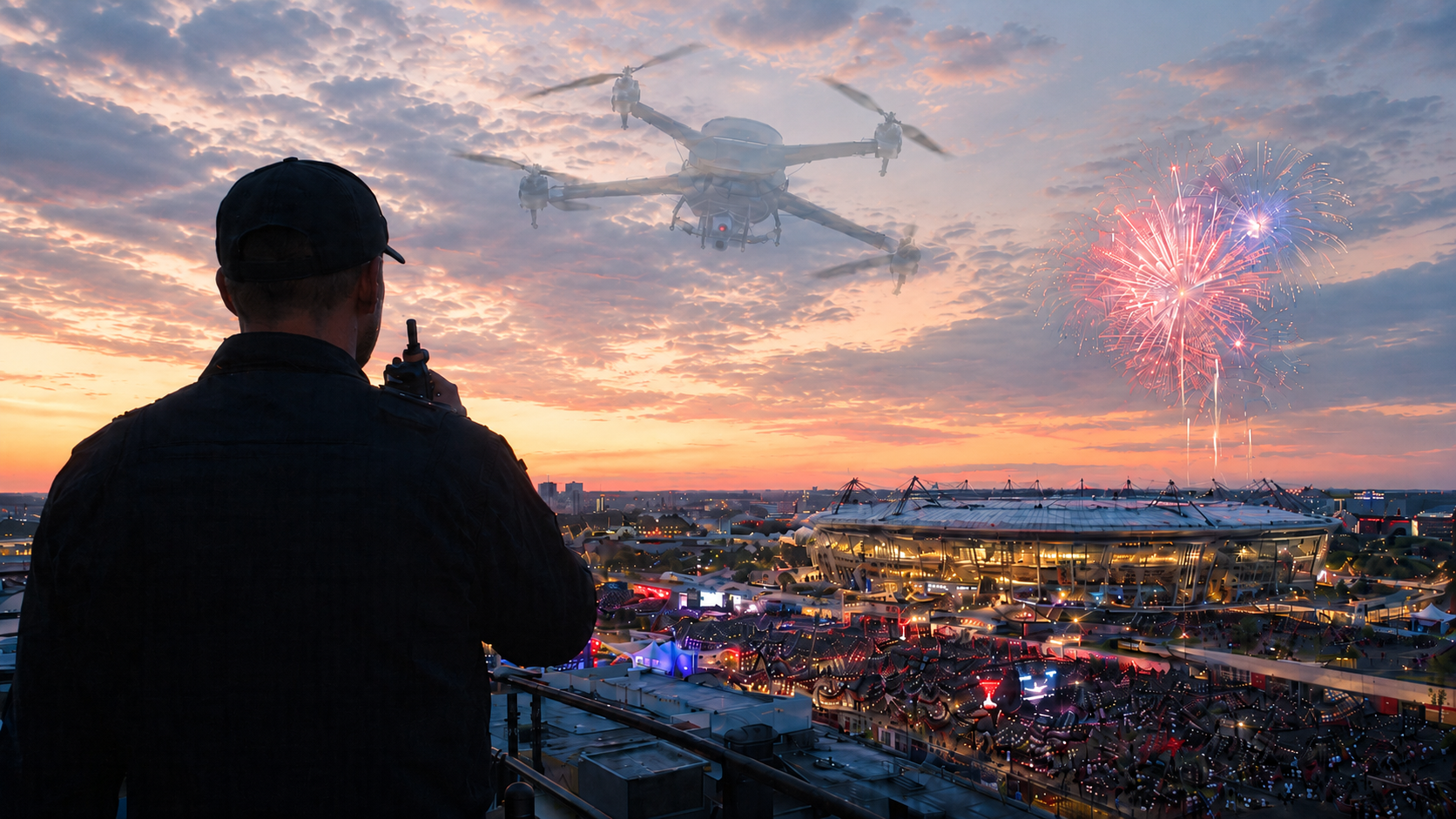
Why has no one successfully carried out a mass-casualty terrorist drone attack against a public gathering in the United States?
The United States has never seen a terrorist fly an explosive-laden commercial drone into a crowd, even through high risk events like the nation's 250th anniversary and the World Cup. That is good news, but it is not proof the threat has passed. Smaller drone incidents have already happened here, and the barriers to a larger one are not permanent. Here is a clear look at why an attack has not happened, and what it would take for that to change.
Has a terrorist ever used a drone to attack a crowd in the US?
No yet, at the time of this writing. As fireworks marked America's 250th birthday and fans filled stadiums from Los Angeles to Miami to the Meadowlands to Washington, DC, not a single bad actor used a drone as a weapon against a crowd. There were plenty of drone incursions into the restricted no fly zones around these events, but no one used a drone to commit an act of terror. The mass casualty scenes that have played out in Ukraine, the Middle East, Myanmar, and Mexico have not been repeated here.
Part of last year's push for counter drone training and technology was aimed at protecting exactly these events. Whatever the security community did, it worked. The harder question is why.
Has any drone attack already happened in the US?
Yes, just not the version people picture. "Nothing happened" is only true if the threat is defined as explosives into a crowd. Lower on the scale, drones are already a problem. Criminals use them to smuggle contraband and gather intelligence. In 2020, someone flew a modified commercial DJI drone rigged with wires at a Pennsylvania electrical substation, in what federal agencies called the first known case of a modified drone used to specifically target US energy infrastructure. And in the late 2010s, a man seeking revenge against a former lover in rural Pennsylvania dropped small explosives and other harmful payloads across a small town for roughly 18 months.
The capability exists. The intent exists. What has not happened is a coordinated, mass casualty attack at a major public event. That distinction matters, because it means the question is not whether bad actors are interested in drones. They clearly are.
Why did the 250th anniversary and the World Cup pass without a drone attack?
We had two irresistible targets, a known gap in most security plans, and drone technology available on nearly every store shelf. And still, no one flew a quadcopter through that gap. After a lot of thought, four explanations stand out. In reality, the answer is probably a mixture of all four and other factors.
Did US security really foil every drone plot?
This is the flattering answer, and the least likely one. It assumes our technology, intelligence, and investigations were sharp enough to stop every plot.
That is hard to believe. Lone wolf attacks routinely happen with no warning. The 2017 Las Vegas shooter was not on anyone's radar. Law enforcement and security services take the drone threat seriously and have worked to deter and catch would be attackers, but there is almost always one who slips through.
We will also probably never know if deterrence was the reason. No one walks up to the officer in a parked cruiser in front of a bank and says, "I was going to rob this place, but because you are here, I moved on to the next one." Prevented attacks do not announce themselves, so we can never truly measure how effective we were.
Are drones still too novel for terrorists in the US?
Inside the United States, drones remain a new tool for terrorist organizations. Groups like ISIS have used small drones since the mid 2010s, but not on US soil. Familiarity may be the reason. A person with a bomb or a gun is a known, proven method, and attackers often prefer what has already worked over untested technology.
Is turning a drone into a weapon harder than it looks?
To security professionals the technology looks straightforward, but there may be a step that is tougher than it appears. Think of it as an “Nth Country” problem. In that classic 1964 experiment, a few physicists with no weapons background were able to design a workable nuclear bomb from public information, while enriching the material and building a delivery system remained extraordinarily hard. Turning a hobby drone into a reliable weapon at a crowded event may be one of those things that is easier said than done.
Do attackers believe a drone is not worth the effort?
The impact may simply seem too small. Most small drones carry a payload of about two pounds. A terrorist chasing a high casualty count may believe a firearm does more damage, and that a small explosive will not earn the media attention they want.
Are commercial drones still a serious threat to public safety?
Yes. None of the barriers above are permanent, and each can be cleared more easily than we would like. Intent is not going away, interdiction will likely never catch everyone and the capability of bad actors usually only moves in one direction.
There is also a simpler path that skips the hard engineering entirely. A drone over a packed stadium does not have to explode to cause harm. It only has to cause a panic. An evacuation or a crowd crush at a sold out venue can injure or kill people without any payload at all. Sometimes the panic is the payload.
It would take only one capable actor to trigger the cycle that follows every major attack. That first big event would open the floodgates to copycats, much as Columbine opened a door for the school shooters who came after. Drones may not be the tool of terror we fear most, but it takes only one person cracking the code to open a Pandora's box the security community has worked to hold shut.
What can your organization do about the drone threat?
Most organizations do not need drone defense hardware. They need awareness and a plan. That means understanding where a drone could create risk on your property, knowing how your team would recognize and report suspicious activity, and building that response into your existing emergency planning before an incident forces the question.
It also means watching for the signals that the threat is shifting: the first clean proof of concept, early copycat chatter, and any move from surveillance toward payload. An assessment is not a one time document. It is something you revisit as the picture changes.
Crisis Prevention and Response helps small businesses, schools, churches, and community organizations across Central Florida think through emerging threats like this one. We only sell knowledge, never hardware. If you want to understand how the drone threat applies to your site, reach out through crisispreventionandresponse.com to talk it through.
Daniel Holland is the co-founder of Crisis Prevention and Response (CPR), a security consulting and training firm that delivers practical security solutions to homes, businesses, schools, houses of worship, and other organizations. He is an active law enforcement officer with over 10 years of experience in investigations, crime prevention, and public safety. He holds Florida Crime Prevention Practitioner and Florida Crime Prevention Through Environmental Design (CPTED) Practitioner designations along with FBI-LEEDA Public Information Officer certification at both levels. He also specializes in emerging threat assessment, with a focus on the drone threat landscape and its implications for civilian organizations.
Frequently asked questions
Has there been a drone terrorist attack in the United States? Not yet. No bad actor has flown an explosive-laden commercial drone into a crowd in the US. Smaller incidents have occurred, including drone smuggling, surveillance, a 2020 attempt to damage a Pennsylvania electrical substation, and a case in which a man dropped explosives on a rural Pennsylvania community using a drone.
Why have not terrorists used drones to attack US events? The four most likely reasons are effective security effort, the novelty of drones as a tactic here, the technical difficulty of weaponizing them reliably, and a perception that the impact would be too small. The real answer is probably a mixture of all four.
How much weight can a small commercial drone carry? It depends on the model, but most small drones can carry a payload of around two pounds, though the danger of a drone over a crowd is not limited to what it carries.
Are drones a growing security threat? Yes. The barriers to a drone attack are not permanent, and a single capable actor could change the picture quickly.
What should businesses and community organizations do about drones? Focus on awareness, reporting, and planning rather than hardware, and build the drone threat into existing emergency plans.